The luxury MPV segment may not be popular, but Kia still tried its hand at it with the Carnival. The Carnival may not have been an in-demand vehicle, but considering its niche, it sold well. Now its Korean sibling, Hyundai, is trying to please the luxury MPV fanbase with the Staria.
Over the years, Hyundai has experimented with its cars. Not all experiments have yielded fruitful results. For instance, the Sonata, Terracan and Santa Fe seem like great cars in hindsight, but their sales records were abysmal. Many of these experiments have been successful, and Hyundai has decided to keep the Indian public on its feet with its range of upcoming cars.
The Staria has been spotted on Indian roads plenty of times. It is easy to set expectations about the upcoming MPV, since it has already been launched in global markets. Here is all the information you need about this upcoming premium MPV.
Looks
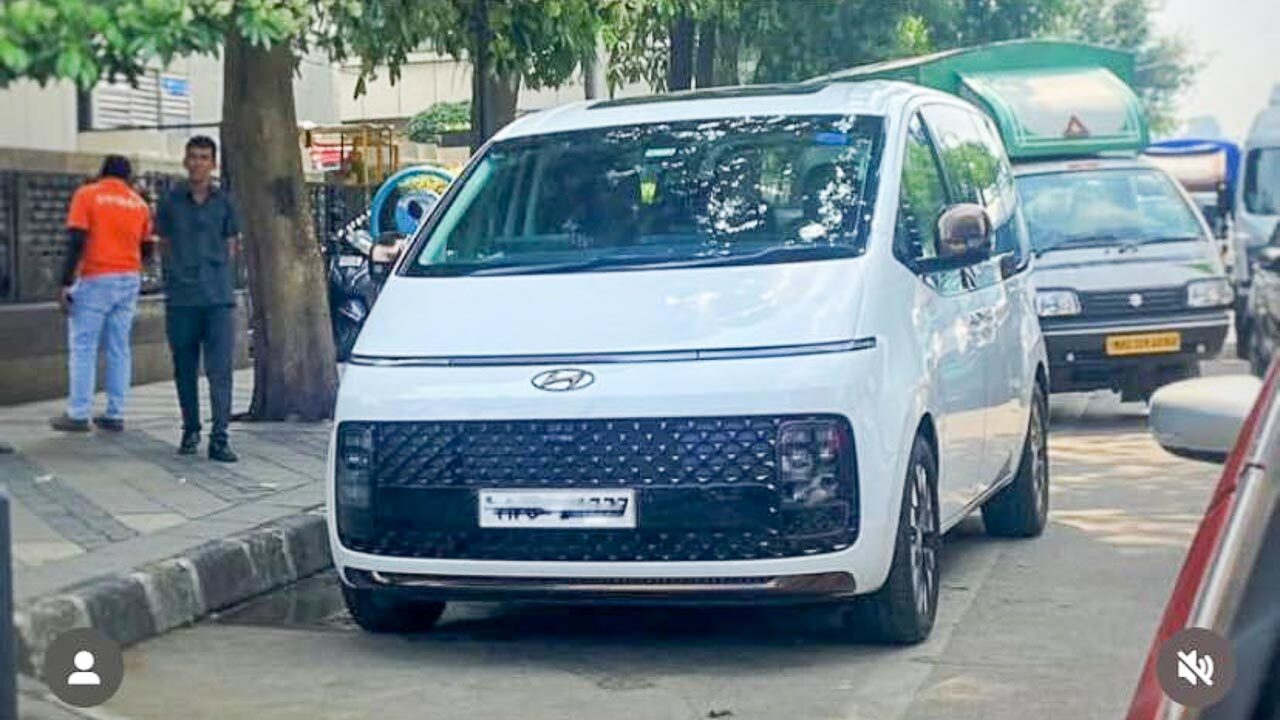
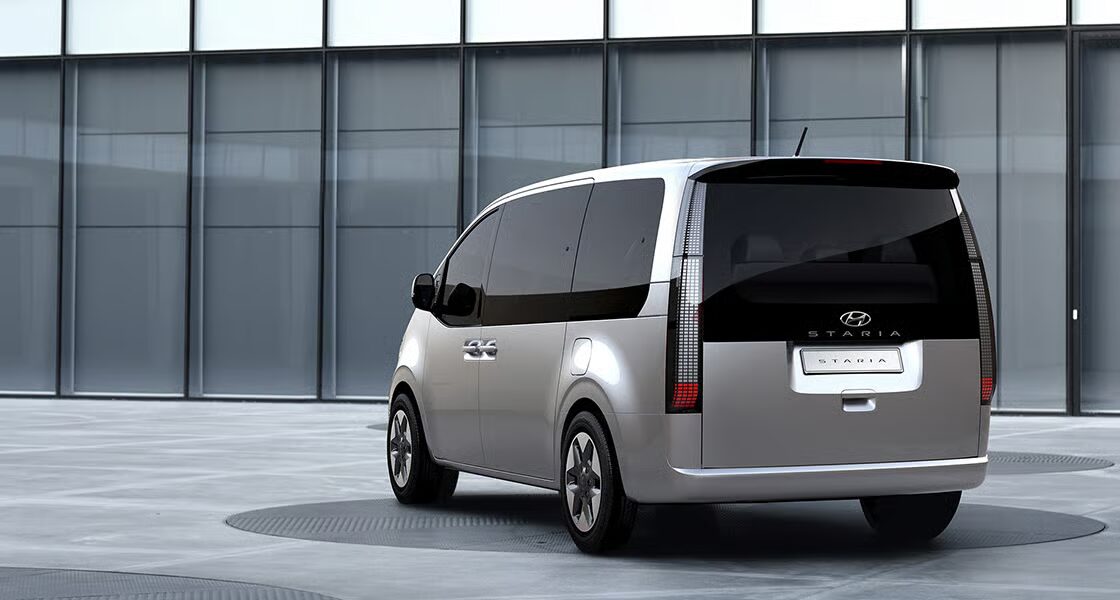
Staria’s looks can be defined as polarising. The design prioritises practicality over aesthetics and yet is a head-turner. It has a sleek body, making it more aero-friendly than most SUVs. Apart from the extruding wheel arches, you won’t notice any cuts, creases or other unusual features that may harm its aerodynamic coefficient.
From the outside, it looks like the windows cover 75% of the complete body. These colossal window panes give the passengers a thorough view of the outside. The front end features LED headlights integrated into the vast, intricate honeycomb grille, with a slim lightbar above. At the rear, the long vertical LED headlights stand out.
The Staria has yet to be tested for the Bharat NCAP, but the signs are positive following its solid Australian NCAP ratings. Its 5-star rating is critical for a car that can carry more than 7 people.
In global markets, the Staria is available as a cargo van or a regular passenger vehicle. It is unlikely that Hyundai will launch it as a cargo van, due to the lack of market for such a vehicle.
Cabin

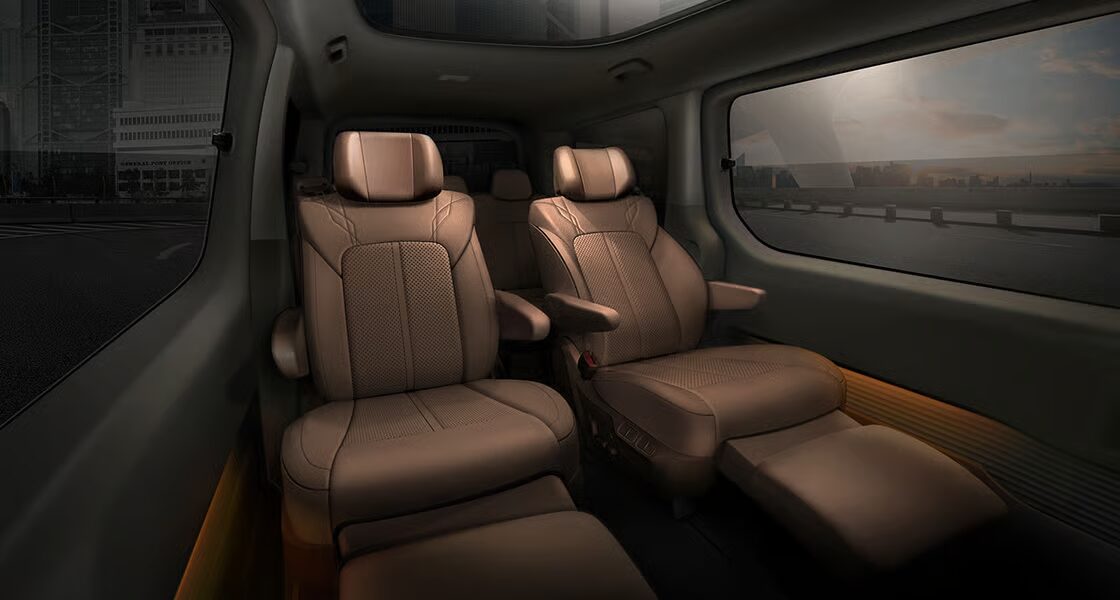
In total, there are three trim options to choose from – Premium, Wagon and (Cargo) Van. With the premium, you get the utmost luxuries for the rear passengers. It is available as a 7-seater with captain seats in the 2nd row, or as a 9-seater with 4 rows of seats, with the middle rows as captain seats. Notably, the 9-seater has swivelling 2nd-row seats to improve legroom for both rows. Being the luxury trim, you get plush leather seats with massaging, 3-stage ventilation and a 4-way legrest feature. The panoramic sunroof only enhances the interior’s airy feel.
The wagon, which is expected to be the more popular trim in India, is available with 9- and 11-seater options. With the 9-seater, you get 3 rows of bench seats, and thanks to its vast dimensions, it is easy to accommodate three people per row. The 11-seater gets 4 rows of seats, with the 3rd row being captain seats. You do not get the same premium leather seats, but these seats are quite comfy as well. You sacrifice a lot of the passenger luxuries from the premium for improved practicality. Notably, all rows fall flat, which means you can enjoy a pleasant camping trip or use that space to load giant objects. However, a major drawback of the Staria is that, with all seats in place, there is minimal cargo space.
In the feature list, you get a powered tailgate, a 10″ digital driver’s display, powered sliding doors, a panoramic sunroof, and ADAS. A minor niggle with the cabin would be that the dashboard looks cluttered, and the 8″ infotainment screen feels puny in a cabin this size. Hyundai may decide to equip the Indian-spec model with a fresher cabin, using features from the Creta’s parts bin.
Powertrain
To power a car that weighs more than 2 tons, the Staria requires powerful engine options. You can choose from a 3.5L V6 petrol engine and a 2.2L 4-cylinder diesel engine. The V6 comes with an 8-speed automatic as standard. Whilst the diesel gets the same automatic option, you also get a 6-speed manual alternative. As for the drivetrain, you get the V6 only in 2WD, but you can opt for AWD with the diesel-automatic.
Despite the aerodynamic body, the Staria will be a gas-guzzler. The mileage figures are expected to be dreadful, and the low aerodynamic coefficient would have an insignificant effect on these figures. Hyundai may introduce the Staria as a hybrid to cater to customers who deeply value fuel efficiency.
Rivals
The Staria’s primary competition includes its Korean sibling, the Kia Carnival. There are no other MPVs that fit the same price bracket. The Innova Hycross, Ertiga, Carens and Triber are considerably cheaper, while the Vellfire and Lexus LM are significantly costlier.
It will also draw away a small piece of the SUV customers. The SUVs that it would compete with would be the Toyota Fortuner, MG Gloster, Jeep Meridien and the upcoming Hyundai Palisade.
Read More: New Hyundai Palisade – What to Expect?
Expected Launch And Price
Hyundai is expected to launch many cars next year , like the Palisade and Inster EV. The Staria would be another addition to the list. The bookings for the Staria could start by mid-2026. However, there is no confirmation of the hybrid’s launch.
The Staria is not going to be light on your bank account, with prices expected to start at 60 lakh rupees while the premium variant could cost upwards of 70 lakh (on-road, Mumbai). Hyundai won’t be expecting it to sell like some of its SUVs, but it is still refreshing to see such unique models on sale. It gives Hyundai customers a wider range of choices.
Image Source
Read More: 3 Popular SUVs With Rs 3.50 Lakh Discount!
Related Posts
- Volkswagen Taigun Facelift – What to Expect? » MotorOctane
- New Volkswagen Tayron – What to Expect? » MotorOctane
- Is Maruti Scared To Launch Its Upcoming SUV? » MotorOctane
- Honda Clocks Sales of 5.91 Lakh Units in Nov 2025
- New Maruti SUV Crash Tested Before Launch! » MotorOctane

Hi, I’m Ravindra Meena , a bike and automobile enthusiast. I share honest reviews, mileage tests, and latest updates about bikes, cars, and EVs to help you make the right choice. Stay connected for real-world insights and trending auto news! 🏍️🚗