Indians have adored Volkswagens since their introduction in India. The Polo had Indian enthusiasts in a chokehold, while the general public praised its other models for being practical and well-built. When it entered the market in 2007, it was a major success, and it has enjoyed a great rep ever since. However, it wasn’t always smooth sailing for the German manufacturer. Today, we will look at the origins and some scandals of the VW group.
Read More: Why Does Fortuner Sell More Than Rs 15 Lakh SUVs?
Origins

The word “Volkswagen” means “Cars of the People”. This sounds all well and good until you realise that the Nazis started this brand. Germany was going through a tough period after the First World War. The cost of living had skyrocketed while the earnings remained low. A car was a luxury that only 1 in 50 people could afford. Cars were a recent invention back then and were quite expensive. Many people tried to make an affordable car for the general public, and Ferdinand Porsche was one of those people. He had created a few prototypes for it, but failed to get any manufacturers to produce it.
The German Labour Front, a Nazi organisation, founded the Volkswagen brand and was tasked with creating a car that the general public could afford. Initially, Volkswagen referred to a single model (the Beetle) but later formed into a company of its own.
The Iconic Beetle
Ferdinand Porsche was put in charge of making this “People’s Car”. The government introduced a savings scheme that allowed you to set aside 5 Reichsmark (the German currency at the time) each week. The Beetle (initially named KdF-Wagen) was designed to carry two adults and 3 children, and could be powerful enough to reach 100kmph.
But with the outbreak of the Second World War, automobile factories were converted to produce military vehicles. This meant that the people who enrolled in this scheme never received their cars. More than 3.5 lakh people were scammed out of a Volkswagen Beetle. What is even more shocking is that under the dictator’s reign, the production of military vehicles was mostly done by forced labour.
Once the Nazi reign ended, the victims filed a lawsuit, but the compensation they got was 5 times less than the amount they had spent in the savings scheme.
Redemption
After the fall of the Nazi regime, Volkswagen fell into the hands of the British. Officer Ivan Hirst and his assistant Heinrich Nordhoff were now in charge of production. The German manufacturer was in big trouble due to difficulties finding supplies and labour. The company was offered to Ford for 0 dollars, and yet they rejected it. It was also provided to Australian and other European manufacturers, but no one was interested. The company looked to change their situation with the Type 1.
The Type 1 (or the Beetle) was exported across the UK, the US and Canada. The initial response was poor since the car was considered ugly and noisy. But after great advertising campaigns, the Type 1, Type 2 (the VW Transporter), and the Karmann Ghia were successful in global markets. This marked the redemption of the Volkswagen brand.
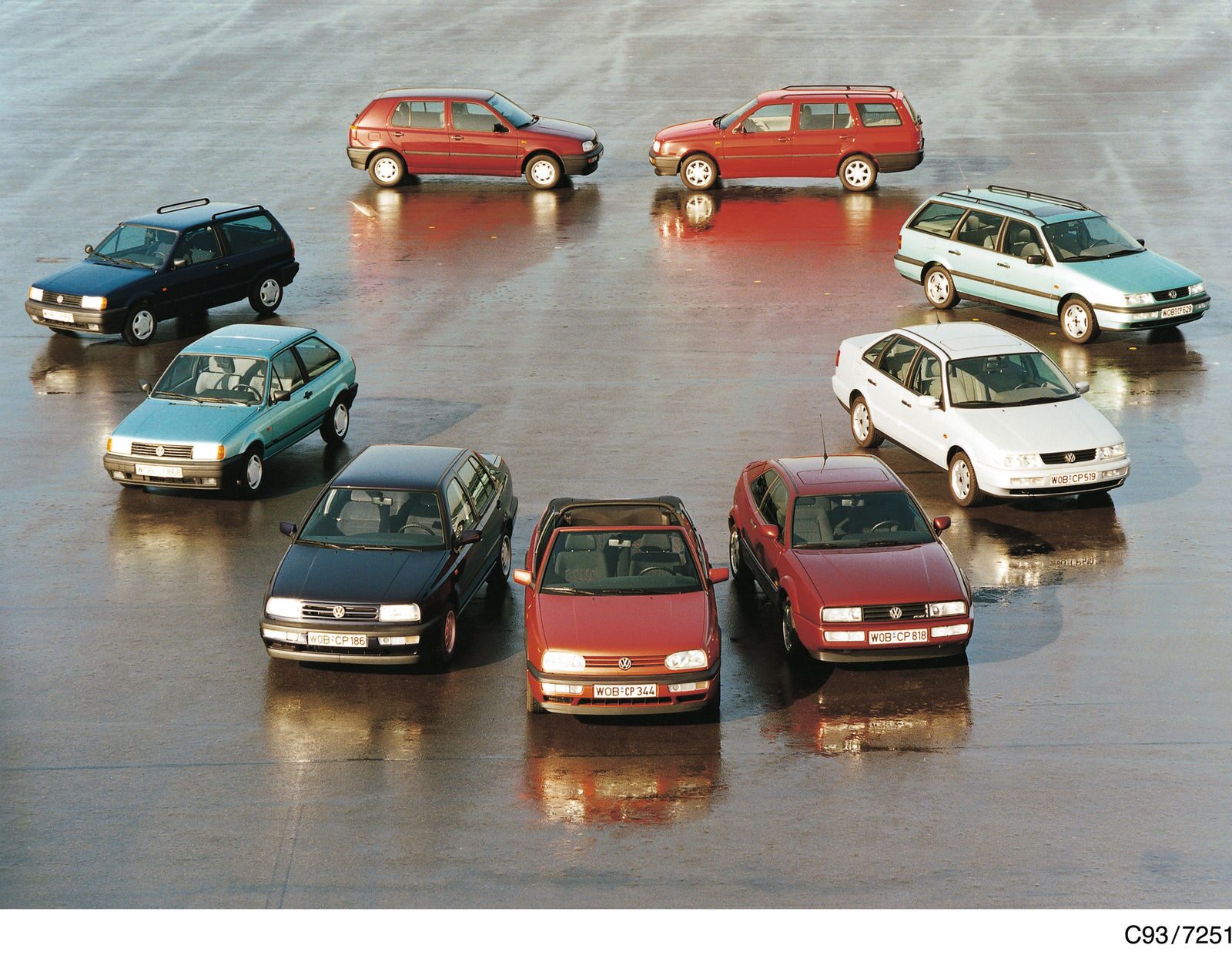
By the late 60s, people were losing their love for the Beetle’s air-cooled engine. And as awareness of global warming rose, people began to ignore the Beetle. Volkswagen had now decided to merge NSU (motorcycle manufacturer) and Auto Union (now known as Audi) to improve its technology. They released a few models that failed to gather any sales. In the 1970s came the Passat, Scirocco, Golf and the mighty Polo (in that order).
These models were big hits in both the global and German markets. Volkswagen haven’t looked back ever since.
Volkswagen Agriculture?
You would think that Volkswagen must have learnt from the past and stayed away from shady business, but no. In the 1960s, Volkswagen tried to diversify its business by trying agriculture in Brazil. Volkswagen promised people with housing and free healthcare if they decided to work for them. But Volkswagen was in close contact with the military group that seized power by force at the time. Formally employed workers had decent living conditions, but subcontractor workers were forced to work there. This labour had poor living conditions, with little to no healthcare, poor hygiene, and long working hours.
If they tried to leave, they were threatened with guns by the military. Some workers had taken on debts to pay for basic food, clothing, and living expenses, and this debt was used as blackmail against them if they decided to leave. With the police and the military on their side, the victims were left with no choice but to work. This case was reopened in the mid-2010s, and VW was ordered to pay compensation.
Volkswagen claimed that the contractors forced the labourers, and the actual VW employees were enjoying a great life. But Volkswagen also turned a blind eye to any arrests and other wrongdoings. Many claim that the military regime at the time worked closely with Volkswagen.
Dieselgate

Another scandal would be the Dieselgate. Throughout the mid-2000s to mid-2010s, the Volkswagen TDI (diesel) was designed to cheat the emission regulators. Usually, a diesel engine offers better fuel efficiency and lower carbon emissions. It also produces significantly more Nitrogen oxides (harmful gases). The US government set a limit on the Oxide emissions in its norms. Volkswagen found that complying with this norm was too tricky, and cheating was much easier. They set up the ECU so that during an emission test, it produces significantly less NOx than during daily use. But during daily use, the engine would run normally while still emitting high levels of NOx.
Read More: Creta’s Old Rival Making Its Comeback In January 2026!
Volkswagen In India

Volkswagen entered the Indian market in 2007 with the Passat and diversified into the Polo, Jetta, Touareg, Vento, and Beetle. In 2020, Volkswagen decided to revamp its lineup with the Virtus and Taigun, replacing the Polo, Jetta, Passat, Vento, and Ameo. These cars were pretty successful as well. Volkswagen has had smooth sailing in India since its introduction. VW India also likes to keep car purists happy by releasing fun-to-drive cars like the Polo GTI, Virtus GT, Taigun GT, and the Golf GTI.
Volkswagen has been a part of major scandals in global markets, and its history will always be tainted. The Indian fanbase is unbothered by Volkswagen’s dark history and still loves their cars. Now, you may think twice before buying a Volkswagen car.
Read More: Rs 4 Lakh Discount On 4 Comfortable 7-Seaters!

Hi, I’m Ravindra Meena , a bike and automobile enthusiast. I share honest reviews, mileage tests, and latest updates about bikes, cars, and EVs to help you make the right choice. Stay connected for real-world insights and trending auto news! 🏍️🚗