The Tata Nano was a valiant effort by Tata to make an affordable car for the price of a rickshaw. It was well known as the cheapest car money could buy. However, people found it derogatory to own a Tata, since it implied that the owner must be poor. When in fact, the Nano was a great deal, offering splendid value for money. Bajaj tried their hands at creating a similiar concept with the Bajaj Qute. Bajaj launched the Qute in 2019, but it is yet to have taken off in sales and popularity.
Here is all the information you need about the Qute and why you probably haven’t heard about it.
What Is A Qute?
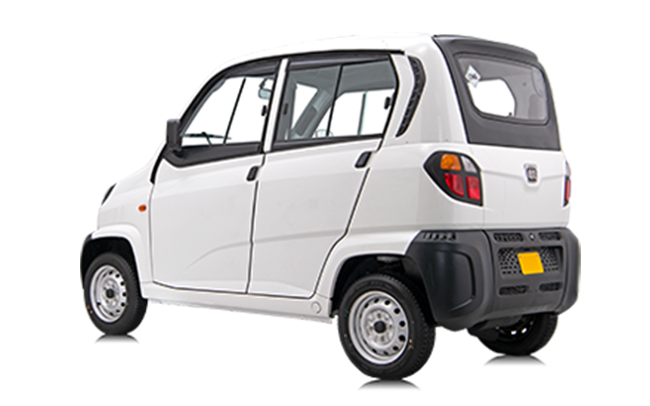
The Indian economy is heavily dependent on the “Auto-Rickshaw” or the “Tuk-Tuk”. The 3-wheeled tin box is a death trap. Bajaj is a major manufacturer of this death trap, but has visions of improving the Rickshaw concept. They seem to have recognised a gap between a car and a rickshaw and decided to capitalise on it.
The Qute has four wheels but isn’t classified as a car by the Indian government, so it is exempt from taxes. Officially, it is categorised as a quadricycle, which means that you can drive one on a motorcycle license. With the Qute, Bajaj aims to appease the Rickshaw drivers and future car owners. It is a 4-wheeler which is just 2.7m long.
You get no amenities whatsoever with the Qute. The few features it has over a rickshaw are two additional doors, an extra wheel, and a steering wheel instead of a handlebar. It is a barebones version of a car and can be considered a premium Rickshaw.
You are devoid of luxuries like air conditioning, airbags, ABS, power steering, etc. Luckily, you do get a radio for some entertainment, seatbelts for safety and a glove box for storage. You do get ventilation in through the windows and vents in the pillars. But these are the sacrifices you have to make to buy the cheapest 4-wheeler in the country.
How Does It Drive?
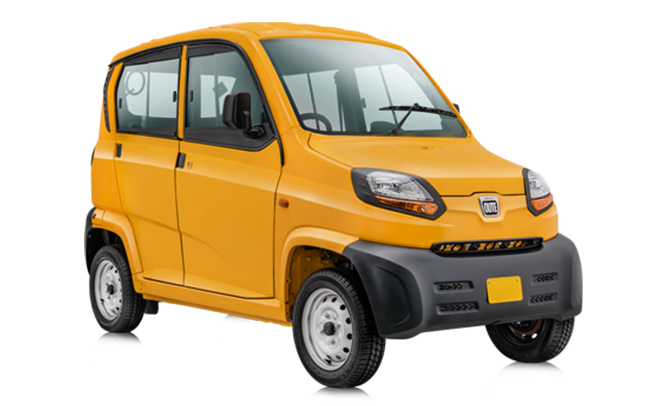
A 216cc 1-cylinder engine powers the Qute. The engine produces a measly 11 horsepower and 16 Nm of torque, which is sufficient to move a 450 kg vehicle. You get it with a 5-speed gearbox. Notably, it has one thing in common with a Porsche 911 – it is a rear-engined RWD vehicle.
On petrol alone, it can achieve 35 kmpl, while the CNG variant achieves 43 km/kg. These are impressive figures and identical to the figures of an autorickshaw. The Qute also has a larger CNG tank capacity than rickshaws, reducing the need to queue for long periods at CNG stations.
Rickshaw engines are notorious for being unrefined, causing discomfort to the passengers. The Qute solves this problem with a stronger structure and a closed cabin. The cabin is also more spacious than a rickshaw, and four people can comfortably sit inside this quadricycle.
The compact dimensions make it suitable for city driving, and it doesn’t compromise mobility compared to a rickshaw. And with the help of doors, the chances of it getting stolen are significantly low as well.
Why Haven’t You Heard About It?

The Bajaj Qute was launched in 2019 and showcased in 2012. Yet, the Qute remains hidden by obsecurity. The Qute has achieved better success in global markets, especially Egypt, with more than 6,400 units exported in FY2025. On the other hand, its cumulative sales in India are about half of this number.
To start with, the Qute isn’t cheap. After RTO and insurance fees, the Qute costs more than 3.5 lakh rupees. Despite the tax exemption, it still costs a lakh more than a rickshaw. You are essentially paying an extra lakh for 2 doors and an additional wheel. It doesn’t sound so bad when you consider that it is more durable than a rickshaw, but the price still seems extravagant.
With the rise of the used car market, you can get a car for a lower price. For instance, you could find a 3-year-old Renault Kwid on the marketplace for a similar cost.
Better Than The Nano?

The Qute’s motive was to attract both car and rickshaw owners, but it failed to do so. The Qute is too expensive for an average Rickshaw driver, while the idea of owning a quadricycle seems egregious to the car owners. When buying a car, at the very least, you expect air conditioning. Let us assume that you do by a Qute. In a few months, when summers arrive, you would like to reconsider your life choices. You could have worked harder or waited a bit longer, but instead you chose to starve yourself of the luxuries of air conditioning to save some money and buy the Qute.
And this problem arises before you consider that the Qute will be frowned upon by your peers. The public perception will remain that you have bought a rickshaw as your personal commute. The Nano had a bad rep, but was still a great deal. You got the bare minimums that you expect from a car, unlike the Qute.
Read More: 7 ‘Cheapest 7-Seaters’ To Buy In India!
What Does The Future Hold For The Qute?
Another issue is acceptance from Rickshaw drivers. The Auto driver union is quite powerful and reluctant to change. There have been records of violent conduct by union members due to the rise in alternatives to the rickshaw (for instance, Rapido). Bajaj will need to invest heavily in resources to convince rickshaw drivers to adopt the Qute. Even if the drivers accept this invention, Bajaj will have to significantly reduce the price tag by at least 50,000 Rs to make it competitive with the market. They would need to take significant risks, as Tata did with the Nano, to make the project successful.
The Bajaj Qute has an identity crisis. It has the utilities of an auto-rickshaw but is priced closer to a car. The 4 doors and 4 wheels may resemble a vehicle, but the expectations of any car owner exceed what the Qute offers. And it is too expensive to appeal to the rickshaw drivers. The concept of the quadricycle is innovative, and it is easy to envision it as the future of auto-rickshaws. Either the government would need to step in and help subsidise such vehicles, or Bajaj would need to find ways to make them cheaper.
Image Source
Read More: BEWARE! You May Lose Your License If…
Related Posts
- This Maruti Suzuki Once Held A Land Speed Record
- Popular Nexon Rival On Ventilator – What Went Wrong? » MotorOctane
- 9 Popular Bikes That Were Discontinued In 2025! » MotorOctane
- Should You Save Rs 1.5 Lakh On ADV 390 & Buy Himalayan? » MotorOctane
- TVS Ronin Kensai, Apache RR310 Speedline Unveiled

Hi, I’m Ravindra Meena , a bike and automobile enthusiast. I share honest reviews, mileage tests, and latest updates about bikes, cars, and EVs to help you make the right choice. Stay connected for real-world insights and trending auto news! 🏍️🚗