Ever wondered why you cannot get a diesel Maruti Suzuki anymore? In the past, Maruti offered the Brezza, Swift, Ciaz, and Ertiga with diesel options. But in 2020, Maruti stopped diesel engine production, leaving customers with little to no engine choices when buying a Maruti Suzuki. So what went wrong and why is Maruti refusing to give its customers a diesel option?
Today, we will look at why Maruti decided to reject diesel engines and what alternatives they have.
The Fiat Partnership

Source
Fiat were the primary source of diesel engines for Maruti. The Fiat 1.3L DDiS engine was an instant hit. This engine was used across the entire Maruti Range. The Swift, Baleno, Ritz, S-Cross, Ertiga, Dzire and the Ciaz all used this 1.3L engine. During this time, diesels were in demand due to the rising petrol costs. Maruti had become the country’s best-selling diesel car maker.
The Vitara Brezza was the primary beneficiary of the Fiat-sourced engine. To give a thorough context, cars in the 4m segment get a tax break compared to longer cars. Vehicles shorter than 4m were subject to a 29% tax rate for petrol and 31% for diesel cars. In perspective, vehicles over 4m were taxed at 43-50%. Additionally, to get this tax advantage, these cars must have an engine capacity of less than 1200 cc for Petrol engines and 1500 cc for diesel engines. Luckily, this tax disparity has come down with the latest GST revisions.
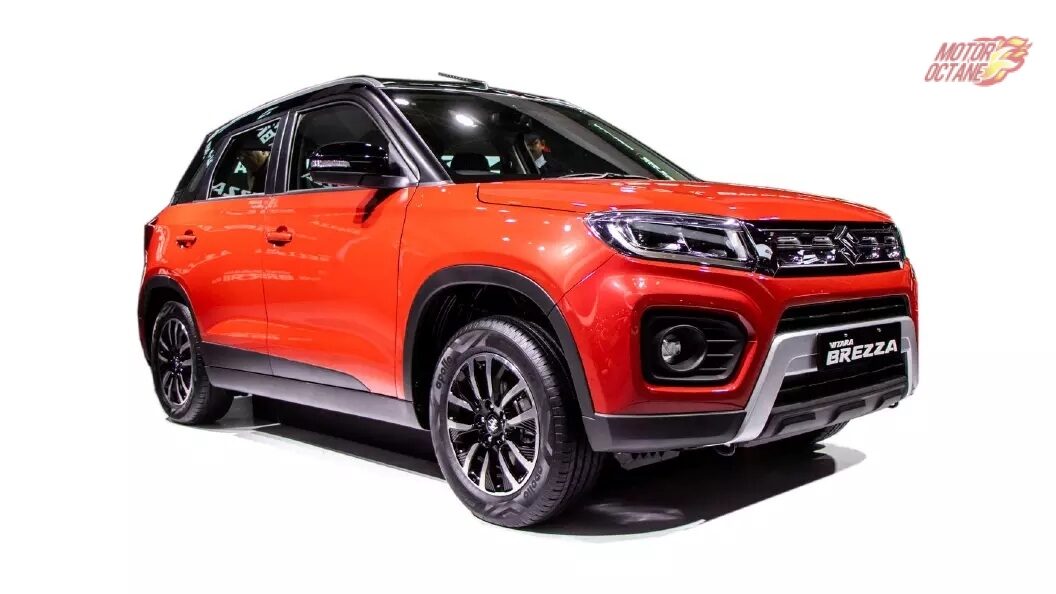
The Vitara Brezza fit this criteria, and since the public liked the 1.3L DDiS so much that it did not get any petrol trims. Other cars like the S-Cross, Ciaz, and Ertiga offered both petrol and diesel engines and were also experiencing strong sales. The partnership with Fiat was working smoothly, and Maruti gained significant market share in the lucrative sub-4m and diesel segments.
Read More: Indian Tax Laws That Could Save You Money
The Fallout

Despite the success, Maruti Suzuki felt paying the licensing fees to Fiat wasn’t viable in the long run. To tackle this obstacle, they decided to make their own diesel engines. The first diesel engine was the 793 cc E08A, used in the Celerio. This engine failed due to a lack of refinement and was discontinued shortly. They tried again with the 1.5L (code-named E15A). Now this is where Maruti’s Diesel debacle commences.
Maruti finally developed their diesel engine after spending almost 1,000 crore rupees on its development. This engine featured a unique integrated exhaust manifold, meaning the manifold was integrated with the engine head rather than being a separate component. The advantage of this system was better packaging and a lighter engine. With such innovative technology, Maruti diesel engines delivered impressive fuel-economy figures.
Upon launch, it received a great response. The engine was refined and fuel-efficient, and the public appreciated it. The engine was used in the Ciaz and the Ertiga, and Maruti had plans to use it in the next-generation Brezza.
Read More: Downfall Of India’s Most Hyped Brand!
The Diesel Debacle
Maruti failed to anticipate the future BS6 norms. The 1.5L diesel was clearly not ready for the update in emission norms. With the BS6, all diesel engines were required to have an intricate DPF (diesel particulate filter) and a DOC (Diesel Oxidation Catalyst). Unburnt hydrocarbons from the combustion chambers can pass through the DPF and DOC only in a gaseous state. If these hydrocarbons didn’t heat up enough to become gaseous, they would get clogged in these filters. Diesel engines are notorious for running hot, and this is not an issue for most diesel cars.
Interestingly, this change in norm led to Maruti’s biggest catastrophe. Making the vehicle lighter meant that the engine endures a lower load. The hydrocarbons had cooled down more than necessary before entering the DPF and DOC chambers. As a result of this overcooling, the unburnt hydrocarbons remained in a liquid state. This would cause the DPF to clog, and the chamber temperature would exceed 1300 degrees Celsius, beyond the DPF’s capacity to withstand. As expected, the DPF and DOC would suffer cracks, causing severe damage to the components. This engine could never pass the BS6 regulations.
Maruti’s short-sightedness led to the discontinuation of diesel engine production. Instead of trying to fix the issue, they deemed that stopping diesel engines would have a less significant financial impact.
What Next?
With the failure of the E15A, Maruti Suzuki had 3 options: fix the 1.5L engine, develop a new one that meets BS6 norms, or stop production. Maruti chose the final option. With the loss they suffered from the E15A, they couldn’t afford to develop a new engine, and the fix for the E15A was too complex. Maruti was willing to let go of their entire share in the diesel segment instead. Another risk of creating a new diesel engine is the upcoming BS7 norms. Maruti won’t want to take on this risk again.
The hype for Diesels has fizzled out. While most SUVs still offer diesel, hatchbacks and compact SUVs have little demand for it. This segment is where Maruti excels, and a diesel engine doesn’t seem that important. Furthermore, Maruti is also working on a new underbody CNG configuration. The Victoris showcased this setup, and Maruti plans to use it across its range.
Maruti has also decided to allocate its resources to a strong-hybrid system rather than use Toyota’s setup. As with the Fiat partnership, Maruti wishes to develop its own system to reduce licensing costs. They unveiled this system recently and have decided to use it in many of their upcoming cars.
Maruti may not have plans for a diesel engine, but it has ideas for CNG and hybrid powertrains. It will be a long time before we see a diesel Maruti again.
Read More: Tata Sierra ADAS Explained

Hi, I’m Ravindra Meena , a bike and automobile enthusiast. I share honest reviews, mileage tests, and latest updates about bikes, cars, and EVs to help you make the right choice. Stay connected for real-world insights and trending auto news! 🏍️🚗